South Africa: Where structural change is creating new demand for executive leadership
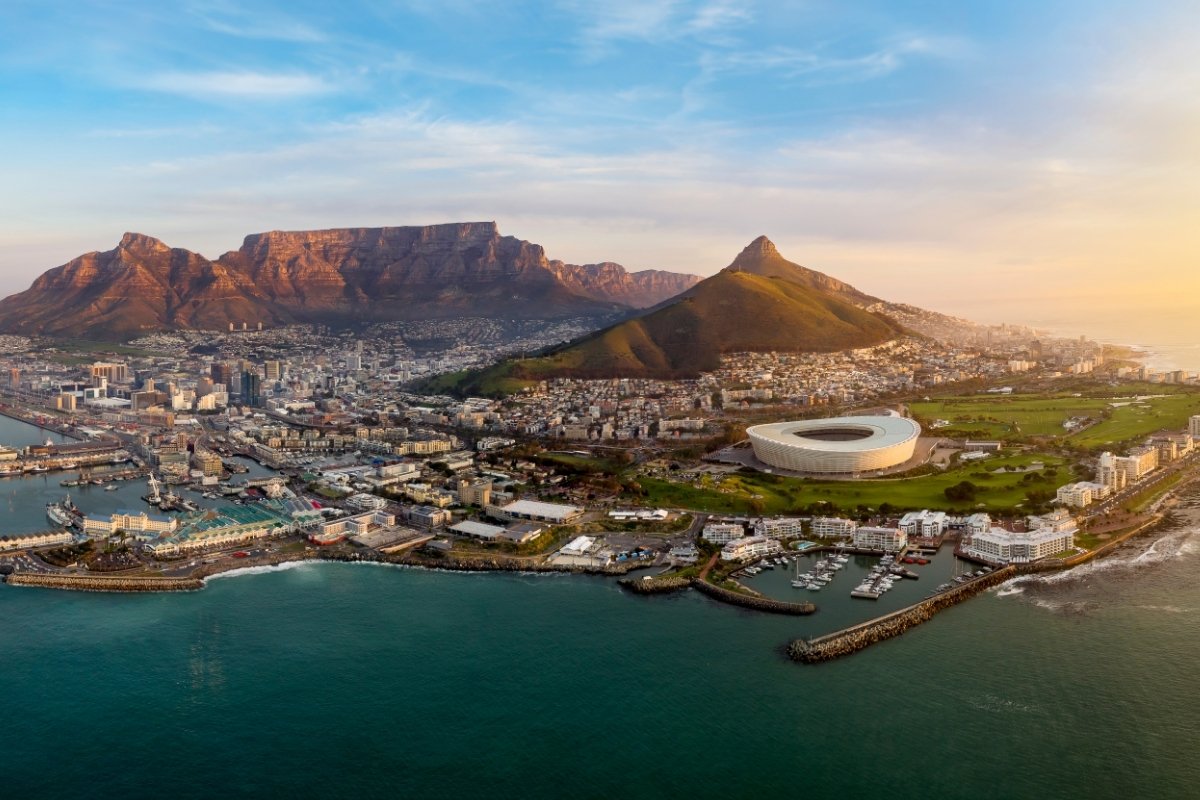
South Africa is entering a period of significant economic and structural change. Energy reform, infrastructure investment, industrial renewal, private equity activity and regional expansion are creating new demands on organisations and on the leaders responsible for delivering change.
South Africa occupies a distinctive position in the African economy. It has one of the continent’s most diversified economies, sophisticated financial markets and an established industrial and corporate base. It is also an important transport and logistics hub and a base for companies operating across the region.
At the same time, organisations are operating against a demanding backdrop. Infrastructure constraints, energy reform, logistics bottlenecks, skills shortages, geopolitical uncertainty and subdued economic growth are all influencing investment and operating decisions.
The OECD projects South African GDP growth of 1.2% in 2026 and 1.6% in 2027. At the same time, structural reforms are supporting investment in energy, water and transport, while further reforms are needed to improve productivity, investment and job creation.
For business leaders, this creates a particular challenge: how do you strengthen the organisation while the environment around it is changing at the same time?
A country undergoing multiple transformations
South Africa’s transformation agenda extends across several parts of the economy.
Energy security remains a central issue. The electricity system is being restructured, transmission capacity is being expanded and renewable generation is increasing. At the same time, the country is working to improve the efficiency of ports and rail networks and attract more private-sector participation in infrastructure.
The government has also placed industrialisation, manufacturing competitiveness, diversification, decarbonisation and digitalisation high on the economic agenda. Its industrial policy identifies infrastructure constraints, industrial capacity, skills and supply-chain resilience among the issues that need to be addressed.
These developments are not simply matters for government.
For companies, they affect production, logistics, capital allocation, operating costs, supply chains and investment decisions. And that creates a different kind of leadership challenge. Organisations may need to redesign operations, strengthen management teams, establish new capabilities or deliver major programmes while continuing to run the existing business.
Industrial renewal requires operational leadership
Manufacturing is a useful example.
South Africa has a significant automotive and industrial base, but companies are having to respond to changes in global supply chains, decarbonisation and the transition towards electric vehicles. In September 2026, Reuters reported that South Africa was introducing incentives for investment in electric and hydrogen vehicle production, while manufacturers continued to highlight challenges around energy, infrastructure and policy certainty.
For companies, this can translate into very practical leadership requirements:
- restructuring operations or supply chains
- improving manufacturing performance
- introducing new technologies and production capabilities
- managing large investment programmes
- strengthening finance and operational controls
- preparing organisations for new regulatory or market conditions
These are not always permanent leadership requirements. A business may need a transformation leader for 18 months, an experienced COO during an operational restructuring, or a CFO who has previously managed a refinancing, carve-out or transaction. The challenge is therefore not always simply finding another permanent executive, it can be about accessing the right experience for a specific phase of the business.
Private equity puts further focus on value creation
South Africa’s private equity market provides another important perspective.
According to the 2025 SAVCA Private Equity Industry Survey, investment activity increased significantly in 2024, with investment value rising by 69% and investment volume by 56%. Infrastructure, energy and IT were among the leading sectors, while exit volumes reached a six-year high.
Infrastructure and energy have attracted particularly strong attention. SAVCA’s survey shows that infrastructure accounted for more than 27% of capital deployed in 2024, while energy accounted for more than 13%. The survey also notes significant fundraising by infrastructure- and energy-focused funds during 2022–2024.
This matters because private equity investment is ultimately linked to what happens inside portfolio companies after the investment. The investment thesis is only the starting point. Value creation can involve improving operational performance, strengthening the management team, preparing for growth, integrating an acquisition, professionalising a business, restructuring the organisation or preparing for an exit.
In the SAVCA survey, talent and organisational assessment was identified as a post-close focus by all respondents, highlighting the importance of people and organisational capability in value creation.
For investors and boards, this raises a practical question: Does the existing leadership team have the experience required for the next phase of the investment? Sometimes the answer is yes. Sometimes additional leadership capacity is needed, and that does not necessarily mean making a permanent appointment immediately.
An experienced interim executive can provide leadership during a defined period of value creation while the longer-term organisation is being developed.
Energy and infrastructure create time-critical leadership needs
South Africa’s energy transition illustrates another dimension of the leadership challenge.
The country is expanding renewable generation, strengthening transmission infrastructure and reforming the electricity market. The government has stated an ambition for renewable sources to account for more than 40% of energy supply by 2030.
At the same time, infrastructure investment extends beyond energy. South Africa is modernising ports, expanding freight rail capacity and developing strategic trade corridors, with the government seeking greater private-sector participation through partnerships and investment. Projects of this scale require more than capital. They require leaders who understand project delivery, stakeholder management, financing, procurement, regulation, operations and commercial development. And the required expertise may be highly specific to a particular phase.
A business may need an executive who has already led a comparable infrastructure programme. An energy company may require someone who understands project finance and large-scale development. An industrial organisation may need a leader who has managed a complex operational transformation. The value lies in bringing that experience into the organisation when it is most relevant.
South Africa as a regional base
There is also a broader dimension to South Africa’s leadership market.
International companies entering or expanding in Africa need more than a local presence. They may need to establish governance structures, build teams, understand local markets, develop partnerships and adapt global operating models to regional conditions.
South Africa’s established corporate environment and position as a transport and logistics hub make it an important base for companies operating across the continent. The South African government has also described the country’s infrastructure reforms as strengthening its role as a regional and continental trade hub. This makes local leadership knowledge particularly important.
An international company entering South Africa may need an executive who understands the local market and regulatory environment. A South African company expanding into other markets may need someone with experience from previous international expansion. A multinational may need a leader capable of operating across several markets at the same time.
This is one reason why the combination of local expertise and international access to leadership talent is becoming increasingly relevant.
In 2026, Valtus Alliance strengthened its presence in Africa through its partnership with Talent Network Global, a Cape Town-based boutique specialising in executive search and executive interim management, in association with Nolands Advisory. The partnership brought Valtus Alliance’s network to all five continents and 32 countries.
The significance is not simply geographic reach. For organisations operating across borders, local market understanding and access to experienced executives in other markets can complement each other.
Interim leadership is becoming a strategic resource
The shift towards this type of leadership model is not unique to South Africa. Global research indicates that interim leadership is increasingly being used for more than executive replacement.
The traditional model is relatively straightforward: A leadership position becomes vacant: the organisation recruits a permanent replacement.
The emerging model is more flexible: A specific business challenge emerges: the organisation identifies the leadership experience required – that capability is brought in for the period in which it is needed.
That can be particularly relevant when the organisation itself is changing.
What does this mean for boards, owners and investors?
For boards and investors, the leadership question may therefore become more specific.
Rather than asking only: Who should we hire permanently? It may also be worth asking: What experience do we need right now?, What specifically needs to change?, What leadership capability is missing?, and How quickly does the organisation need to move? Is this a permanent requirement, or is it linked to a specific phase of transformation, investment or restructuring?
There will obviously be situations where the right answer is a permanent executive appointment. But there are also situations where the organisation needs a particular type of experience for a defined period – to stabilise operations, lead a transformation, strengthen a management team or prepare the company for its next stage. The distinction between filling a vacancy and adding specific leadership capability is important.
Leadership will be critical to South Africa’s next phase
South Africa’s next phase will depend not only on investment and reform, but on the ability of organisations to turn both into measurable results.
Energy reform needs strong management. Infrastructure investment needs delivery capability. Industrial renewal requires operational leadership. Private equity value creation depends on what happens inside portfolio companies. International expansion requires leaders who can operate across markets. In each case, capital and strategy are necessary, but neither is sufficient on its own.
For boards, owners and investors, that makes access to experienced leadership increasingly important, particularly when the challenge is complex, time-critical or linked to a specific phase of change. The opportunity for executive interim management is therefore not simply to fill leadership gaps. It is to bring the right experience into the organisation when the situation demands it – combining leadership capability, local market understanding and international perspective.
That is increasingly relevant not only in South Africa, but in markets where organisations are being asked to change faster than their permanent leadership structures can always adapt.